5/25/2020

Bikefishing Basics To Get You Started


Bikefishing is something I have come to love over the past couple of years because it combines two things I really enjoy doing, riding bikes and fishing.  Living in Minnesota with its bike infrastructure and abundance of lakes, rivers and streams makes it a perfect place to marry these two activities.  As a kid I used to do this all the time and I've revisted it again as an adult.  Now, getting to my fishing spot is half the fun.  One of the nice things about bikefishing is you don't need a lot of fancy equipment to do it, just the basic gear and a bike.  This post will go over some of the techniques and items needed to get started on your own fishing adventures via bicycle.


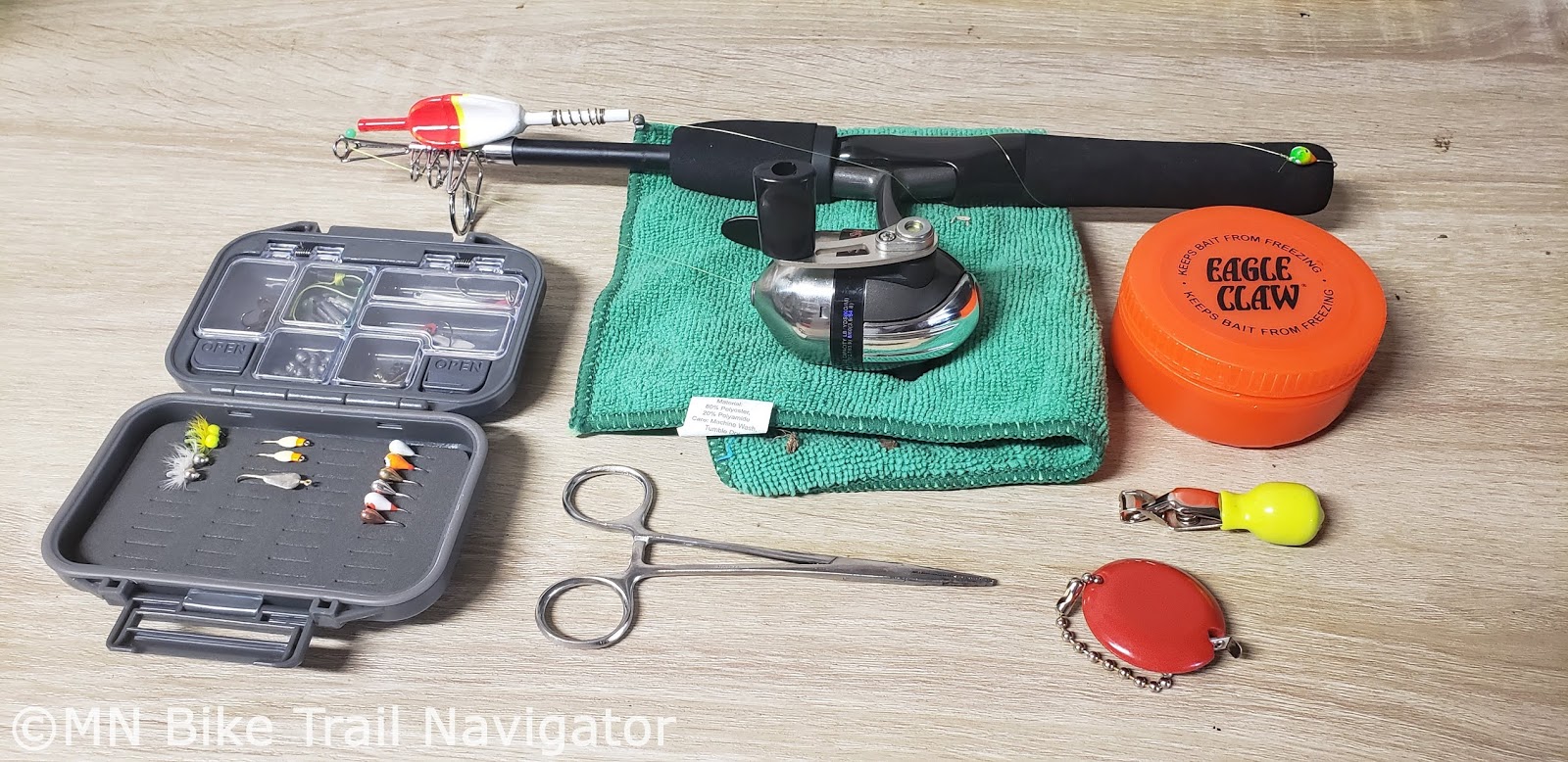
I like to travel light on the bike with regard to fishing gear.  I only bring what I think I'll need for the fish I am targeting.  For panfish I usually just bring my ultralight collapsible rod/reel combo, jig box, forceps, line cutter, a depth finder weight, towel and waxies/nightcrawlers for bait.  These can all fit in a bar bag, frame bag or backpack.


Three of the other species I like to fish for are catfish, carp and northern pike.  For these I use a medium action collapsible baitcasting pole and reel with 30# braided line.  Targeting these fish requires me to bring along a little extra gear such as a small tackle box, blood bait, live bait and a rod prop for bank fishing.


I prefer collapsible fishing rods for their convenience of storage and transport on the bike but multi-piece travel rods will do the trick also.  Some of the other things I will bring along for the trip are a portable digital scale with tape measure (can be found on Amazon for under $15), vinyl or latex gloves for handling fish and bait, a collapsible stool, a small cooler with beverages and snacks, zipper bags and of course, a fishing license.


I usually use live bait for panfish which includes waxworms, nightcrawlers and crappie minnows.  Transporting these is pretty easy, for waxies I use a bait puck, nightcrawlers in the package they came with and minnows in a Bait Up container.  When the weather heats up it is a good idea to keep your bait cool.  I'll store my bait puck and worms in a small cooler or bring along a frozen gel ice pack to place against them in my bike bag or backpack.  The Bait Up container can be stored in a cooler, with a frozen gel pack or in the body of water I'm fishing to keep the minnows alive and active.


There are a couple of different methods and bikes I use depending on the terrain involved and the species of fish I am targeting.  Traveling light is a must for me but I also want to make sure I have everything I need for a successful and comfortable outing.  A backpack or commuter bag is usually my first choice when I don't want to bring along a lot of gear but still have room for a couple of beers, snacks and my portable folding stool.


For longer distance travel to get to my fishing spot I will take my gravel/commuter bike.  These are usually lakes within 20 miles of my home that I fish for panfish or northern pike.  I also have some secret spots along the Minnesota and Mississippi Rivers that are easily accessible for skinny tires where I frequently try my luck for channel catfish and jumbo carp.


For those harder to reach areas like sandy beaches along the river or hidden spots that require some bushwhacking to get to, I will opt for my fatbike.  Since there are no rack mounts on my carbon Farley I have to carry everything I need for the outing in one of my appropriately sized backpacks.  This method is great for moving along the river bank and trying multiple spots in search of catfish.  I usually go by the old catfisherman's words of "if no bites in 15 minutes, it's time to move on."


When I want to carry a few more items or just want to skip the backpack I will strap on the panniers and let the bike carry the weight.  This allows me the extra storage space to bring along more tackle, extra rods and live bait for those longer outings or times when I want to target several species of fish.


For those short fishing trips or when I want to go after panfish only I will pack very light, usually only a rod, jig box, towel, forceps and waxworms or nightcrawlers.  All of this fits nicely in a small handlebar bag.


Living in the land of 10,000 lakes means there are probably several of them within biking distance from your home.  The Minnesota DNR website is a terrific resource to find out more information about the lakes, rivers and streams near you.  Visit the Where to fish page to get started.  Here you will find helpful links including a LakeFinder for desktop or mobile, river maps and accessible places for shore fishing.  If you are new to fishing visit the Learn to fish page for tips and links to get you started.


Minnesota has more than 200 fishing piers and on-shore platforms around the state and finding them is easy with the DNR's Fishing piers and shore fishing sites page.  Here you'll get the information you need about the location, a link to the LakeFinder page that contains size, depth and fish species and directions to get there using Google Maps and Bing.  When using the Google Maps link make sure you select bicycling directions to find the most bike-friendly route to get there.

When I want to learn more about the structure and depth of the area I will be fishing I use the Navionics Boating Marine and Lakes app on my phone.  Another handy feature of this app is that it allows me to set markers on the map with notes about the structure or fish species so that I may return to that exact spot later.  This app does have an optional paid subscription that has access to more advanced features and downloadable chart layers.  Available for both Android and IOS.


If you have questions or would like to learn more about bikefishing from those that do it regularly, put in a request to join the Bikefishing Facebook group.  This is a private group and membership will need to be approved by the admins or moderators to see posts and who is in the group.


Fatbikers that use their bikes for fishing those hard to reach areas may be interested in joining the Sport-Utility Fatbikers Facebook group.  In addition to fishing, this group is also for the cyclist that uses their fatbike for hunting, bikepacking, bikecamping, bikejoring, winter commuting or adventure riding.  This is also a private group and membership will need to be approved by the admin to see posts and who is in the group.


When the open water season comes to an end that doesn't mean that bikefishing has to also, it's just time to shift gear and methods for hardwater season.  For more information about ice fishing by bike see my updated post "Fatbike Ice Fishing and How to Do It-Revisited."


Bikefishing can be as simple or complex as you want to make it.  This usually depends on the duration of time to be spent and the fish you'll be going after.  For me it was trial and error to see what was convenient and what worked best.  Travel light or bring extra gear, it all depends on how you are going to carry it on the bike to your fishing spot.

Make sure to follow all Minnesota fishing regulations for the body of water you'll be fishing.  These can be found online on the MN DNR's Minnesota fishing regulations page, be downloaded in PDF format to your computer or phone or a paper copy can be picked up at licensing agents around the state.  Minnesota residents over the age of  16 will need to purchase an angling license to legally fish.  These can be purchased online, by phone at 1-888-665-4236 (1-MN-LICENSE) or in person from numerous ELS agents around the state.  A list of these agents can be found on the MN DNR's Where to buy a license page.  Good luck and happy bikefishing!

5/06/2020

The Joys of Riding After Dark


I've always liked biking after dark but in this time of social distancing I am enjoying it even more for numerous reasons.  With Minnesota's current Stay at Home Order people are doing their exercise or getting out of the house for a while during daylight hours.  This has caused congestion on local trails and in parks making social distancing more difficult.  This is where biking after the sun goes down is the perfect time to get in that daily ride.  In this post I will go over the benefits of riding at night and provide you with some helpful tips to be safe and have fun.


The trails at your favorite park are almost empty, go ride them. Just be sure to abide by the park's visitor hours.


Get out a little before dark to take in the sunset.  I've seen a lot of sunsets from the saddle and it never gets old.


Some areas around the city that have too much traffic to ride safely during the day have almost none once the sun goes down.  This is when I ride the areas that I normally would not go during daylight hours.


Mountain biking at night is a blast and in most cases you'll have the trail to yourself.  Work on those night singletrack skills and experience that old familiar trail in a new light.  I ride with a light on my bars and one on my helmet so I can see better through the turns, find my line and navigate obstacles scattered along the trail.


I've been doing a lot of  bike from home rides recently and riding at night is a fun way to explore my local trails in a new way.  Most trail users have gone home by the time the sun sets making it a great time for riding and practicing safe social distancing.

Tips for riding at night


Drivers may not see cyclists after dark so increase your odds of being seen by using reflectives placed on you or your bike.  While lights will get you seen from front and behind, reflectives will let drivers know you are there from many other angles up to 500 feet away.  I use Brilliant Reflective's Stick-on Reflective Strips strategically placed on my bike for maximum visibility when riding at night.


During night rides I will adjust my headlight beam frequently depending on the speed I am traveling.  The last thing I want to do is overdrive my headlight and hit that pothole or fallen tree branch I didn't see.


Intersections are dangerous during daylight hours and the darkness can make a cyclist even less visible.  Approach with caution and use your lights and positioning to let motorists you are there.


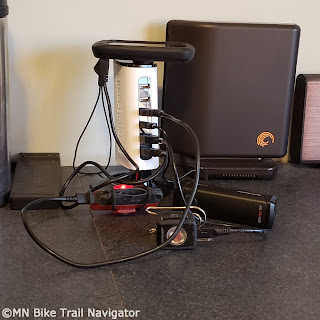
The last thing you want when riding at night is to have a light that is giving you a low battery indicator.  Make sure your lights are fully charged before a ride and know the length of run time for its various modes so you don't cut your battery short.  For longer rides I will bring a backup headlight in case I use up the battery on the first light before the end of my ride.  Then I can simply swap it out and continue riding illuminated.


Whether you're a mountain biker, roadie, graveleur or trail rider, getting out on your bike at night is very enjoyable and easy to practice safe social distancing.  The winds have died down, people are at home, the nocturnal creatures are starting to come out and the trail or road is all yours.  Night rides are the perfect way to unwind after a long day or to take that next bike adventure.  For more information on riding at night visit the Night Riding section of Bike MN's Minnesota Bicycling Handbook. Be safe, be seen!

4/11/2020

Twin Cities Social Distancing Ride Planning


Minnesota's Stay at Home Order has all of us experiencing a little cabin fever and riding a bike is a great way to cure it.  Social distancing is key right now to help flatten the Covid-19 curve but since implementation of the order some Twin Cities trails have become quite crowded.  For those not comfortable with road cycling, bike trails are a great alternative but with fewer people driving I've found taking to the road is more enjoyable now and definitely helps avoid getting too close to others.  Lately I've been using a mix of road and trails, low traffic routes, times of day and the weather to practice social distancing riding with great success.  Another tactic I have been using for some time is to ride from home.  This has helped me discover the bike infrastructure in my neighborhood and beyond.  In this post I will introduce you to some ways to find areas to explore and plan rides to help you avoid the crowds and still put on plenty of miles.

Bikeverywhere
Image Credit: Bikeverywhere

Doug Shidell has been producing the most up-to-date, accurate and readable cycling maps since 1984.  His Twin Cities Bike Map has been a staple for cyclists navigating the Twin Cities for just as long.  It is available in tear and water resistant print form from Bikeverywhere and Twin Cities bike shops for $13.50.  For those that prefer to carry the map on their phone there is a mobile version that works with the free Avenza Maps app for both IOS and Android.  The mobile version of the Twin Cities Bike Map sells for $5.99 and covers 1,000 square miles of bike trails and bike friendly roads.  It works with the GPS in your phone to show you exactly where you are on the map so you can never get lost.  Pick up a print map today or download the mobile version and start exploring the roads and trails in your neighborhood.

Google Maps
Google Maps for mobile has been a long time favorite of mine for getting from point A to point B while cycling.  Using Bicycling Directions in the app, it will help you get to where you want to go by offering several route options showing mileage, elevation gain/loss and estimated travel time.  I have used this many times over the years to find the fastest or best bicycle friendly route to get home when I'm out on one of my ramblings.  

By visiting Google Maps on the web you can plan out a destination ride and send the route directly to your phone to use in the Google Maps app.  A pair of earbuds or a Bluetooth speaker to get turn-by-turn audio directions in real time can be used so you don't have to keep looking at your phone.  Google Maps is a free app that is available for both IOS and Android.

Gravelmap

I've been a gravel advocate for a very long time and these low traffic roads are perfect for practicing social distancing cycling.  With the help of Gravelmap.com you'll see that you don't have to travel far to find gravel roads and routes close to and within the metro area. 


In addition to the changing scenery you'll find that in most cases you have the road all to yourself making gravel a great choice to avoid people out exercising.  Search the map for gravel roads and routes near you today and go on a bike adventure away from everyone.

Tips

Off peak times are perfect for getting out and riding to avoid crowds.  One of my favorite times is early in the morning when everyone is still in bed.  Pedestrian and cycle traffic is very light or non-existent which makes it very easy to practice social distancing.


My other favorite time is just after dark.  By now most others have already got in their walk, ride or errands done and are back home for the night leaving the trails and roads empty.  I can ride areas that are normally busy during daylight hours without having to come near or pass others.


Being a year round cyclist I've ridden in every type of weather and just because conditions aren't ideal doesn't mean it won't be an enjoyable ride.  Staying warm and dry during the spring months is pretty easy with the proper ride apparel for the conditions.  Get out there and ride during the rain, most everyone else will be inside.  Windy days are fun when the gusts are at your back and they add some resistance training to make you a stronger cyclist when they're not.  It's these times when the weather isn't as favorable that there are few people out recreating on the paths and trails.


Housing neighborhoods are another good place to ride to practice social distancing.  Depending on the proximity to main roads and trunk-ways, they can be low traffic making them a good area to do some road riding for those not comfortable with riding on higher traffic roadways.


When I want to get in a road ride but avoid the hustle and bustle of the city I will venture out to the lower traffic country roads near my home.  I've been riding these roads for years and have my favorite routes and roads.  If you are unfamiliar with country roads in your area, plan out a route using Google Maps in the satellite mode.  By zooming in you will be able to tell if the roads you want to ride have a wide shoulder or no shoulder at all.


If I'm riding during hours of the day that tend to see more trail users I will avoid the high traffic areas and opt for those that don't get used as much.  If you are familiar with the trail systems near your home, chances are you already know which ones to steer clear of during peak times. 


Make yourself visible to drivers, other cyclists and pedestrians.  Drivers may not be used to seeing cyclists as much this time of year and with more people out biking during the Stay At Home Order we are currently under in Minnesota there will be a lot more of them to watch out for.  Use daytime running lights front and rear and position yourself to be seen by motorists and others.


There are plenty of opportunities to ride bikes and avoid higher pedestrian and cyclist trafficked areas to practice social distancing.  By using some of the resources and tips mentioned above you should be able to put on some serious solo mileage that will lift your spirits and put a smile on your face.  Now get out there and ride your bike.

Central Lakes Trail
The Central Lakes Trail is a 55-mile trail 
that runs through the heart of 
west-central Minnesota 
from Osakis to Fergus Falls

2/27/2020

Fatbike Trail Condition Resources for Freeze/Thaw Season


As we head into March the weather will become warmer bringing freeze/thaw cycles to winter singletrack.  Below freezing temperatures overnight quickly become above freezing during the daytime turning a hard packed groomed trail into one that is soft and easily rutted.  To prevent this, trail managers use their discretion on whether a trail should close or remain open.  Closures are going to happen and knowing before you head out for a ride can save you a trip if your favorite trail is closed.  It's better to know beforehand than finding out once you get to the trailhead.

Twin Cities

The Minnesota Off-Road Cyclists (MORC) have made it easy to get updates on the latest winter trail conditions for the trail systems they manage.  The one way that has been around the longest and that most people are familiar with is the MORC Trail Conditions Forum.  MORC Forum members keep this page active with reports on trail status with a brief condition description for your favorite Twin Cities area trails as well as several others around Minnesota and Wisconsin.


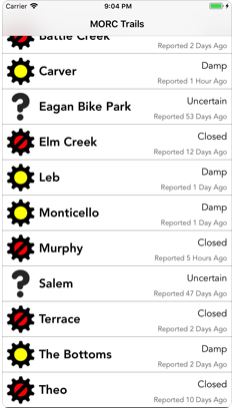
Another way is to get the MORC Trail Conditions app for IOS and Android.  Both apps are free and use data that is populated from the MORC Trail Conditions Forum giving the user instant access to the latest updates.


The MORC Trail Conditions Twitter page is updated from the MORC Trail Conditions Forum.

MORC Trail Conditions

And finally, trail status updates can be found on Facebook at the links below.


Central Minnesota

Cuyuna Lakes
http://cuyunalakesmtb.com/

The Cuyuna Lakes Mountain Bike Crew regularly updates trail conditions in the Cuyuna Country State Recreation Area via Twitter and their Facebook page.  Know the trail status and get tire pressure recommendations for freshly groomed sections beforehand.


Jail Trail/Plum Creek

The Mid MN Cycling Club posts trail status updates and conditions reports for Jail Trail and Plum Creek on the Mid MN Cycling Club Facebook page.

Duluth Area

C.O.G.G.S. (Cyclists of Gitchee Gumee Shores) updates trail conditions for several trails in the Duluth area via Twitter.  These include Hartley Park, LesterPark/Hawk Ridge/Morning Side, Mission Creek, and Piedmont/Brewer.  You can also visit the COGGS Trails Status Feed page on their website.

Spirit Mountain

Spirit Mountain has winter lift-served, downhill fat tire biking Sundays with bonus days in February and March depending on weather and trail conditions.  Visit the Spirit Mountain Snow Report page for the latest updates.

Northern Minnesota

Detroit Mountain

Detroit Mountain Recreation Area updates trail and grooming conditions for its Nordic and Fatbike loops on their Detroit Mtn-Trail Report on Twitter.  Follow at @DMRA_Trails.

Donald D. Ferguson Demonstration Forest

The Donald D. Ferguson Demonstration Forest located just north of Two Harbors has eight miles of  non-motorized, multi-use trails that are groomed in the winter for snowshoeing, cross-country skiing and fatbiking.  Get the latest trail updates by visiting the Lake County Mountain Bike Trails Facebook page.

Giants Ridge

Giants Ridge in Biwabik offers 60 km of Nordic trails and introduced lift-served downhill fatbiking this winter.  Check the Giants Ridge Snow Report for the latest status and trail conditions.  Reports are updated daily during the season.

Laurentian Divide/Lookout Mountain

The Laurentian Divide Recreation Area located near Virginia has groomed singletrack in both the Laurention Divide and Lookout Mountain areas in Superior National Forest.  Visit the Mesabi Outdoor Adventures Facebook page for the latest grooming reports and trail status.

Maplelag Resort

Maplelag Resort grooms 20 km of trails for winter fatbiking on their property in Callaway.  For trail status and grooming updates visit the Fat Biking Trail Report page.  Additional reports can be found on the Maplelag Resort Twitter page and Maplelag Resort Facebook page.

Pincushion Mountain

Just a short trip up the Gunflint Trail from Grand Marais sits the Pincushion Mountain trails.  These trails with overlooks of Lake Superior are groomed throughout the winter season for fatbiking.  Visit the SCA Trail Conditions page and Superior Cycling Association Facebook page for the latest updates and recommendations.

Tioga Recreation Area

The Tioga Recreation Area has groomed singltrack throughout the winter on its 500 wooded acres in Cohasset.  Regular updates on grooming and trail status can be found on the Tioga Recreation Area Facebook page and GRIMBA Facebook page.

Southern Minnesota

Gamehaven/Oxbow

Rochester Active Sports Club Facebook page regularly posts grooming updates and trail reports for both Gamehaven and Oxbow trails.

Heath Creek/Sechler Park

If you're looking to ride Heath Creek or Sechler Park in Northfield visit the CROCT Facebook page for the latest updates and recommendations.

Kaplan's Woods

The Owatonna Trails Association grooms the trails at Kaplan's Woods Park and regularly posts trail updates to their Owatonna Trails Association Facebook page.

Kiwanis

The Mankato Area Mountain Bikers post regular updates on the six miles of trail at Kiwanis Recreation Area on the MAMB Facebook page.

There are still plenty of opportunities elsewhere to ride if the trails are closed.  For a list of these places please visit my post, Alternative Winter Fatbike Riding Opportunities and keep on riding.
Related Posts Plugin for WordPress, Blogger...